Hospitals and Healthcare Workers Must Be Protected Amid Escalating Violence in Upper Nile State
By MSF
Médecins Sans Frontières (MSF) urgently calls on all parties to the conflict in South Sudan’s Upper Nile state to respect and protect civilians, healthcare workers, and medical facilities by international humanitarian law.
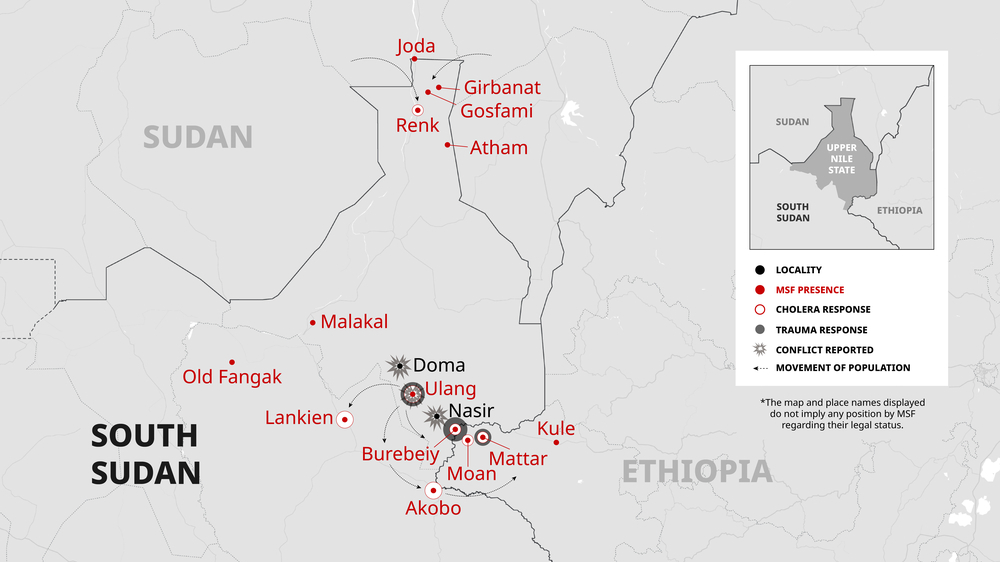
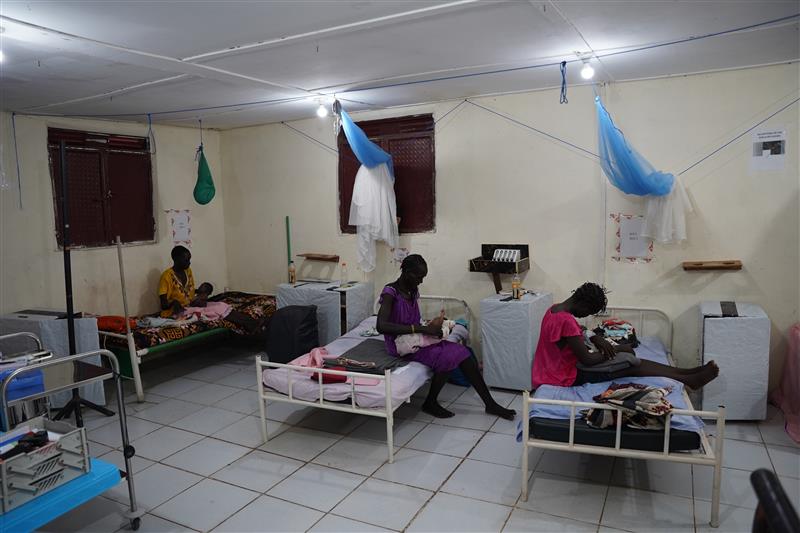
As violence and displacement intensify in the region, MSF teams continue to provide lifesaving medical services in some of the few remaining functional health facilities in Upper Nile. MSF is supporting hospitals in Ulang and Malakal, where teams are treating a growing number of patients with violence-related injuries, as well as cases of cholera.
Additionally, MSF teams support several primary healthcare centers, including Doma, Mandeng, Kuich, Galachel, Baliet, and Khorfulus, with cholera-related medical supplies and staff training to strengthen the response and improve access to care in affected areas.
“Despite the ongoing violence and displacement, many people, including women, children, and the elderly, have remained in their villages and towns in Ulang and Malakal counties. In a context where functioning health facilities are already limited, the few remaining hospitals are a lifeline for people in the area. It is vital that medical facilities, patients, and healthcare workers are protected and that access to medical care is not obstructed,” said Zakaria Mwatia, MSF Head of Mission in South Sudan.
The cholera outbreak, combined with insecurity and limited access to water and sanitation, is placing communities at even greater risk. Since February, more than 430 cholera patients have been treated at Ulang hospital alone, which remains the only functioning health facility in the area.
Furthermore, in recent weeks, MSF teams in Ulang and Malakal have provided care to over 230 patients, including women and children, for violence-related injuries. At the same time, MSF’s regular lifesaving medical activities continue. More than 200 patients, including women and children, are currently under treatment in Malakal and Ulang hospitals. In just the past two weeks, the medical teams have provided 240 outpatient consultations, 97 antenatal care visits, 47 emergency room consultations, and assisted with 30 deliveries.
“As an independent organization, we provide medical care to everyone in need—regardless of their affiliation—neutrally and impartially,” Mwatia added.
MSF remains deeply concerned about the ongoing violence in Upper Nile state, which has displaced thousands and made access to healthcare increasingly difficult. Meanwhile, the cholera outbreak is spreading rapidly, putting even more lives at risk and deepening an already dire humanitarian crisis.
“With cholera spreading and violence continuing, the need for medical care in Upper Nile state has become more critical than before,” Mwatia emphasized.
Beyond Ulang and Malakal, MSF teams also deliver medical services in Renk County in Upper Nile. Additionally, MSF is also working in the Greater Pibor Administrative Area and across several locations in Jonglei State, including Akobo, continuing to support communities affected by cholera.