World Vision Reached 7.5 Million People Across East Africa as Humanitarian Needs Hit Record High in 2025
By Sasuk Taban
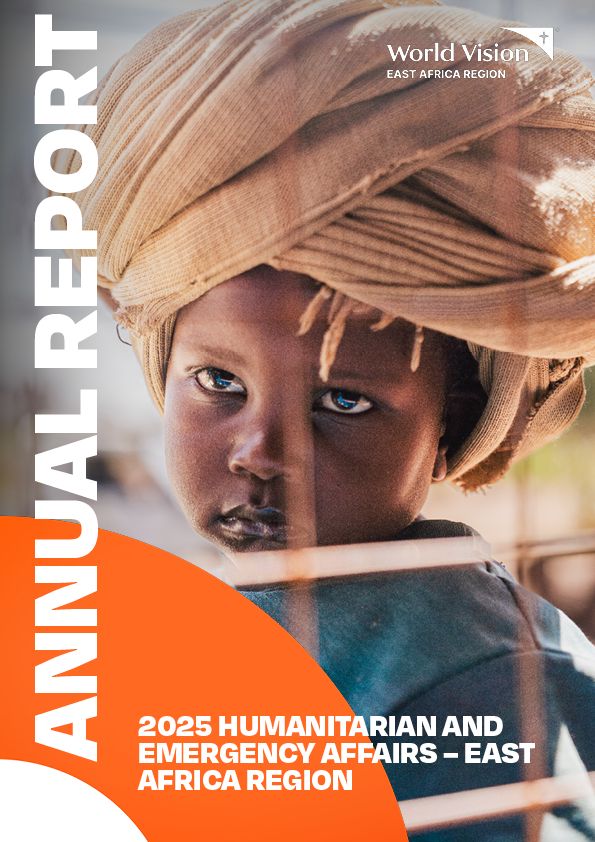
World Vision East Africa says it reached 7.5 million people, including 4 million children, across nine countries during the 2025 financial year despite unprecedented funding cuts and escalating humanitarian crises across the region.
According to the organization’s FY2025 Humanitarian Annual Report, East Africa experienced one of its most challenging years as conflict, climate shocks, disease outbreaks, mass displacement and economic hardship drove humanitarian needs to record levels while international funding declined sharply.
The report says World Vision adapted its operations by prioritizing faster, more flexible and anticipatory responses, delivering integrated assistance in food and cash support, health and nutrition, education, water and sanitation (WASH), child protection, livelihoods, and mental health services.
Regional Humanitarian Emergency Affairs Director Barzil Mwakulomba said the humanitarian sector faced difficult decisions as funding continued to shrink while needs expanded.
He noted that anticipatory action, flexible financing and stronger community-led disaster preparedness were no longer optional but essential for saving lives and protecting vulnerable communities.
The report highlights that South Sudan remained one of the world’s most fragile humanitarian settings, with more than 9.3 million people requiring humanitarian assistance, over half of them children. The country also continued to face severe food insecurity, cholera outbreaks, conflict-related displacement and economic challenges.
During FY2025, World Vision South Sudan responded to the country’s sustained humanitarian crisis, recurring cholera outbreaks, the impact of the Sudan conflict, and intercommunal violence in Western Equatoria through emergency health, food security and protection interventions.
Across East Africa, the organization responded to 20 humanitarian emergencies in nine countries, including the Sudan crisis, refugee emergencies, floods, droughts, cholera outbreaks, earthquakes and disease outbreaks.
The report also warns that reductions in humanitarian funding have had devastating consequences for vulnerable families. It says food ration cuts have forced many children to leave school, engage in child labour, beg for survival or enter early marriages as households struggle to cope.
World Vision’s research found that children living in food-insecure households were significantly more likely to experience malnutrition, exploitation and exposure to violence. The report adds that closure of health facilities and nutrition centres due to funding shortages has left many vulnerable communities without access to life-saving medical services.
To improve emergency response, the organization expanded the use of anticipatory action by relying on climate forecasts, disease surveillance and early warning systems to trigger interventions before crises escalate. Flexible funding mechanisms also enabled rapid responses to cholera outbreaks in South Sudan, drought in Somalia and other emergencies across the region.
Looking ahead, World Vision warns that humanitarian needs are expected to remain at historic highs in 2026 while available resources continue to decline.
The organization called on donors, governments and humanitarian partners to strengthen support for life-saving programmes and invest in locally led, resilient and community-based responses.The report concludes that protecting lives in East Africa will require stronger partnerships, early action and sustained investment to help vulnerable communities withstand increasingly complex humanitarian crises.