UN Humanitarian Chief Urges Faster Action as Ebola Outbreak Worsens in DR Congo
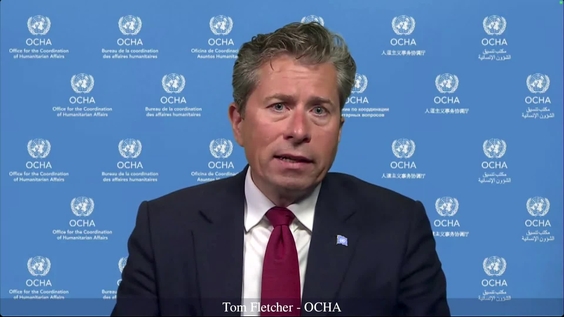
Credit: UN Web TV
United Nations Under-Secretary-General for Humanitarian Affairs and Emergency Relief Coordinator Tom Fletcher has called for an urgent acceleration of efforts to contain the Ebola outbreak in the Democratic Republic of the Congo (DRC), warning that delays will cost more lives and increase the humanitarian impact across the region.
In a statement issued on 9 July, Fletcher said Ituri Province remains the epicentre of the outbreak, but the virus is spreading to other provinces where insecurity and frequent population movements are increasing the risk of transmission.
Since the outbreak was declared on 15 May, more than 1,700 people have been infected and over 600 have died in the DRC. Uganda has also confirmed 20 Ebola cases, raising concerns about cross-border spread.
Fletcher noted that while the World Health Organization (WHO) and the Africa Centres for Disease Control and Prevention (Africa CDC) are leading the epidemiological response alongside the Government of the DRC, the crisis extends beyond public health.
He said millions of people in eastern DRC were already affected by conflict, hunger, displacement, weak public services and limited access to healthcare before the outbreak. He also warned that recent cuts in humanitarian funding have made the response more difficult.
To strengthen the response, the Inter-Agency Standing Committee has activated a System-Wide Scale-Up, bringing together the world’s largest humanitarian organizations to support efforts to control the outbreak.
The UN has also deployed a Senior Ebola Coordinator to the affected areas to improve leadership, coordinate operations and address challenges slowing the response.
Fletcher announced the release of up to US$60 million from the Central Emergency Response Fund (CERF) to boost Ebola response efforts in the DRC and strengthen preparedness in neighbouring countries at risk, including Uganda, South Sudan and Burundi.
He emphasized that the United Nations is coordinating closely with Resident and Humanitarian Coordinators across the region to strengthen cross-border preparedness and ensure countries are ready to respond if the outbreak spreads.
The humanitarian chief urged all parties to guarantee safe and sustained access for health workers, humanitarian personnel, medical supplies and response equipment. He also called on governments to keep borders and supply routes open, warning that blanket travel restrictions can disrupt humanitarian operations and essential trade without preventing disease transmission.
Fletcher further appealed to donors to rapidly disburse pledged funding, stressing that both the Ebola response and broader humanitarian assistance must be adequately supported.
He said investing in disease surveillance, laboratory testing, infection prevention and control, referral systems and community engagement remains the most effective defence against Ebola.
Fletcher concluded by stressing that communities must remain at the centre of the response, with local leadership, accountability, protection against sexual exploitation and abuse, and gender-responsive programming forming key pillars of the operation.
He warned that any delay in scaling up the response would result not only in more Ebola-related deaths but also in worsening humanitarian consequences for vulnerable populations across the region.